
Pennsylvania’s rapid expansion of data centers is creating new economic opportunities while intensifying disagreements over tax incentives, environmental concerns, and the authority of local governments to regulate development. As technology companies invest heavily in facilities supporting artificial intelligence and cloud computing, communities across the state are weighing the promise of construction jobs and new revenue against the long-term costs of hosting large industrial-scale operations.
The debate is becoming increasingly visible in communities such as Hazle Township in Luzerne County and Upper Burrell Township in Westmoreland County. Both have experienced conflicts between residents, developers, and local officials over proposed data center projects, illustrating the challenges of balancing economic development with community interests.
Pennsylvania’s Data Center Tax Incentives Carry a Significant Price
Pennsylvania introduced its Computer Data Center Equipment Exemption Program to attract technology investment and encourage companies to establish facilities in the state. The original program, implemented in 2017 under former Governor Tom Wolf, operated as a tax refund initiative. Companies initially paid sales tax on qualifying equipment and then applied for reimbursement, subject to an annual cap of $5 million.
That structure changed in 2021 when Act 25 replaced the refund system with a direct sales and use tax exemption. Eligible data center operators no longer have to pay the state’s 6% sales tax on qualifying equipment purchases. The change reduced the visibility of the program’s actual cost to taxpayers, according to Kasia Tarczynska, a researcher with the nonprofit Good Jobs First.
To qualify, companies must meet minimum investment and employment requirements. Facilities in counties with fewer than 250,000 residents must commit at least $75 million in new spending and create 25 jobs. In more populated counties, the investment threshold rises to $100 million, with at least 45 jobs required. Operators must also provide at least $1 million annually in employee compensation.
Despite those requirements, the financial implications for the state are substantial. A February 2026 Pennsylvania Department of Revenue report estimated that the exemption could reduce state tax collections by nearly $1.9 billion over seven fiscal years beginning in 2024-25. At the time, 12 companies held certificates under the program. The department has since reported 16 active certificates covering facilities operating or under development.
The Department of Revenue also acknowledged that it does not have a direct method for tracking the revenue losses associated with the exemption. That limitation raises questions about how accurately Pennsylvania can measure the program’s cost and compare the tax benefits with the economic activity generated by participating companies.
Experiences in other states illustrate the potential for projections to fall short. Ohio’s data center tax incentives cost approximately $1.6 billion in 2025, substantially exceeding the state’s original estimate of $136 million. Pennsylvania’s experience will depend on the number and scale of facilities built, equipment purchases, and the duration of their eligibility.
Project Hazelnut Puts Local Zoning Authority to the Test
The conflict surrounding Project Hazelnut in Hazle Township demonstrates how state-level economic development priorities can collide with local land-use decisions.
In November 2024, Governor Josh Shapiro launched the PA Permit Fast Track initiative through an executive order intended to streamline approvals for major development projects. Project Hazelnut, a proposed data center development on approximately 1,300 acres, was among the projects associated with the initiative. NorthPoint Development owns the site, while Amazon Web Services was later identified as the intended end user.
The proposed development attracted criticism from residents and environmental advocates, particularly after extensive woodland clearing took place at the property. Local resident Ashley Bahrt became involved in organizing opposition, attending public meetings, researching local zoning requirements, and submitting open-records requests.
Her efforts eventually led to a zoning dispute. Although the project had received more than a dozen state permits and Amazon had obtained a tax exemption certificate for the facility, Hazle Township’s Board of Supervisors denied NorthPoint’s zoning approval. The decision halted the project at the local level.
NorthPoint challenged the township’s decision, but a county court upheld the local government’s position. The developer subsequently appealed to the Pennsylvania Commonwealth Court. The outcome of that appeal remains an important factor in determining the project’s future.
The dispute also drew national attention after NorthPoint announced a $165 million community benefits offer. The proposal included funding for a new township police department and payments of $10,000 to eligible households. Some residents criticized the offer, arguing that financial incentives should not substitute for public participation or address concerns about the scale and environmental effects of the development.
Upper Burrell Residents Challenge a Different Development Approach
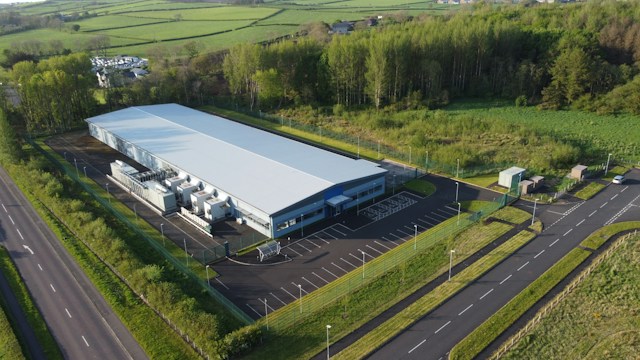
A similar dispute has emerged in Upper Burrell Township in Westmoreland County, where data center developer TECfusions has encountered opposition from residents and environmental advocates.
Unlike the situation in Hazle Township, Upper Burrell’s Board of Supervisors approved TECfusions’ land development plan in August. Residents Allen Uhler and Guy Fuller, along with the nonprofit environmental organization Protect PT, subsequently filed a land-use appeal. They argue that the township board violated its own zoning ordinance when approving the project.
Protect PT has worked with residents to explain the potential effects of data center development and the role local governments play in regulating it. Executive Director Gillian Graber has questioned the difficult position facing municipal officials, who may encounter legal challenges from developers if they reject projects and from residents if they approve proposals that allegedly violate local requirements.
Both Upper Burrell and Hazle Township adopted temporary 180-day moratoriums on data center development in May and June, respectively. The pauses gave officials time to examine zoning rules and consider regulations specifically addressing data centers.
Upper Burrell supervisors voted unanimously on October 22 to approve a new data center ordinance, shortly before the township’s moratorium was scheduled to expire on November 2. The ordinance represents an effort to establish clearer local standards as development pressure increases.
Construction Jobs Bring Immediate Economic Benefits
Supporters of data center development point to the substantial employment opportunities created during construction. Pennsylvania’s building trades have experienced increased demand as developers undertake large-scale projects involving electrical systems, plumbing, heating, ventilation, cooling equipment, and specialized infrastructure.
Jim Enders, president of the Central Pennsylvania Building & Construction Trades Council, described the current construction environment as unusually active. His organization represents workers across 23 counties and has seen significant demand for skilled labor connected to data center development.
Enders reported that his local union, which represents plumbers, pipefitters, and HVAC technicians, has its largest apprenticeship class in its 112-year history, with 112 apprentices. He also cited potential earnings of $130,000 to $150,000 annually for experienced journeymen at one Lancaster-area project, with general foremen potentially earning as much as $250,000.
These wages demonstrate how large construction projects can create opportunities for skilled workers and apprentices. They also highlight an important distinction in evaluating the economic impact of data centers: construction employment is generally temporary. Once facilities are completed and operational, staffing requirements decline substantially.
The long-term employment picture therefore differs from the initial construction boom. Communities evaluating development proposals need to consider permanent staffing levels alongside the larger but temporary workforce required to build the facilities.
Property Tax Revenue May Depend on Local Assessment Practices
Developers and supporters also argue that data centers can increase municipal tax revenue by replacing vacant or underused land with valuable commercial development. Property taxes are a major source of funding for local governments, schools, and other public services.
However, the amount of revenue communities receive may depend heavily on how local assessment offices value data center properties.
The article highlights a difference between Pennsylvania and Virginia’s Loudoun County, a major data center market. In Loudoun County, property assessments include the value of equipment housed inside data centers. Luzerne County officials, by comparison, indicated that they assess data center properties based primarily on land value, similar to the approach used for warehouses.
That distinction could have significant financial implications. Data centers contain expensive electrical, cooling, computing, and networking equipment. If those assets are excluded from property assessments, the taxable value of a facility may be considerably different from its overall investment value.
Consequently, claims about the potential property tax benefits of data center development should be evaluated using the assessment methods and tax arrangements applicable to each community. A large private investment does not automatically translate into an equally large increase in local property tax revenue.
Environmental Concerns Extend Beyond the Construction Phase
The expansion of hyperscale data centers has also intensified concerns about their effects on surrounding communities. Residents and environmental advocates have raised questions about electricity demand, water consumption, air pollution, noise, light, and the loss of wooded areas or other natural habitats.
These facilities require substantial power to operate servers and maintain cooling systems. Depending on their design, they may also rely on significant water resources or backup generators. The cumulative effects can become more important when several facilities are proposed within the same region.
John Quigley, a senior fellow at the University of Pennsylvania’s Kleinman Center for Energy Policy and a former secretary of both the Pennsylvania Department of Environmental Protection and Department of Conservation and Natural Resources, has emphasized the potential health and environmental risks associated with large-scale data center development.
The concerns extend beyond individual property boundaries. Increased electricity demand can place additional pressure on regional power infrastructure, while water withdrawals and wastewater management may affect local resources. Construction can also permanently alter landscapes through clearing, grading, road development, and the installation of utility infrastructure.
The extent of these impacts varies by facility. Environmental assessments, utility plans, water-use projections, and enforceable operating requirements are therefore important when evaluating individual proposals. The available reporting does not provide comparable water and electricity consumption estimates for the projects discussed, making it difficult to quantify their cumulative effects.

Balancing Technology Investment With Community Interests
Pennsylvania’s data center expansion presents a complicated economic and policy challenge. The projects can generate substantial construction activity, create opportunities for skilled trades, and attract private investment. At the same time, state tax incentives reduce public revenue, permanent employment may be relatively limited, and local governments face difficult decisions about zoning, infrastructure, and environmental protection.
The disputes in Hazle and Upper Burrell townships demonstrate that community acceptance cannot be measured solely by the amount of money developers offer or the number of construction jobs they promise. Residents also want meaningful participation in decisions that can permanently change local land use and infrastructure demands.
For state and local officials, a more complete assessment of data center development requires transparent reporting on tax expenditures, permanent employment, property tax contributions, electricity and water consumption, and environmental impacts. Without consistent information, communities may struggle to determine whether the long-term benefits justify the public costs.
As Pennsylvania continues attracting technology investment, the decisions made by local governments and state agencies will help determine how much control communities retain over development and how effectively the economic benefits are distributed.
Editorial considerations before publication: The source material contains several claims that should be checked against current public records. The $1.9 billion tax-revenue estimate is from a February 2026 Department of Revenue report and should be identified as a projection. The status of NorthPoint Development’s Commonwealth Court appeal, the final terms of Upper Burrell’s new ordinance, and the current status of both projects should be verified. The reported construction wages are examples from a particular project, not typical earnings across the entire industry. The article also does not provide project-specific measurements of water use, electricity demand, or permanent employment, so those impacts should not be presented as established figures.