
Pennsylvania is preparing to bring a shuttered nuclear reactor back into service as electricity demand grows, driven in part by data centers, artificial intelligence and industrial development. The effort is part of a broader national push to restore three closed nuclear plants, backed by billions of dollars in federal financing.
For Northeastern Pennsylvania, the developments raise important questions about the region’s own energy future. As communities debate proposals for large data centers and other energy-intensive projects, the nuclear restart effort offers a case study in how new electricity demand can influence infrastructure investment, public financing, environmental oversight and local economic decisions.
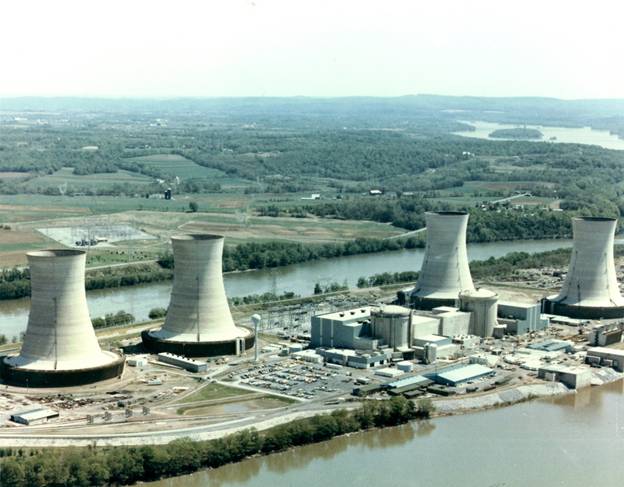
The Pennsylvania project is the Crane Clean Energy Center at Three Mile Island, near Middletown, south of Harrisburg. Constellation Energy plans to restart the reactor under a long-term power agreement with Microsoft. The project is part of a national effort expected to restore a combined 2.25 gigawatts of generating capacity across three facilities, enough to supply roughly two million homes and businesses. The U.S. Department of Energy has committed loans of up to $4.4 billion across the three projects.
Three Nuclear Plants Are Being Considered for Restart
The federal initiative involves facilities in Pennsylvania, Michigan and Iowa, each with a different history and timetable.
Crane Clean Energy Center, Pennsylvania
Planned restart: 2027 target
Constellation plans to invest approximately $1.6 billion to restart the former Three Mile Island Unit 1 under a 20-year agreement with Microsoft. The reactor is designed to provide about 835 megawatts of carbon-free electricity.
Palisades, Michigan
Restart preparations underway
Holtec International is working to restore the facility after its 2022 closure. The restart process has encountered a technical issue involving a fuel assembly, and the company must resolve outstanding issues before the reactor can operate.
Duane Arnold, Iowa
Target: early 2029
NextEra Energy and Google are working toward reopening the plant, which shut down in 2020 after storm damage. The planned arrangement includes a long-term electricity contract to serve Google’s data center demand.
Restarting a closed nuclear facility can be faster than building a new reactor, partly because the site already has substantial infrastructure and grid connections. It still requires extensive maintenance, qualified staff, fuel, regulatory approvals and inspections. The timelines remain targets, not guarantees.
Three Mile Island Brings the Issue Closer to Home
The Pennsylvania project is especially relevant to NEPA because its demand from large technology companies can reshape decisions about the state’s electricity supply. Three Mile Island has a complicated history. In 1979, Unit 2 suffered a partial meltdown in the most serious accident in U.S. commercial nuclear power history. Unit 1, the reactor now proposed for restart, continued operating until 2019 and did not experience that accident.
The Nuclear Regulatory Commission says Constellation must obtain approval to restore the operating licensing basis, demonstrate that plant components are fit for service and complete necessary upgrades. The agency has established a dedicated review process for the proposed restart.
For NEPA residents, this is an important distinction: a restart announcement does not mean a facility has been cleared to operate. Regulatory review, technical readiness and safety requirements remain essential parts of the process.
What This Means for NEPA’s Data Center Debate
Northeastern Pennsylvania has already become part of the statewide discussion about large-scale data center development. In May 2026, Gov. Josh Shapiro visited Archbald, where residents raised concerns about the potential effects of proposed facilities on their communities. In August, the governor signed an executive order establishing additional requirements for data center projects seeking state permits.
The state’s Responsible Infrastructure Development requirements call for developers to address energy affordability, environmental protection, transparency, workforce development and community engagement. Among the requirements, developers must commit to covering the full costs of new generation and grid infrastructure needed for their projects rather than shifting those costs to Pennsylvania households and businesses. They must also meet water conservation standards and engage with local communities.
The nuclear restart effort highlights why those requirements matter. Large data centers need substantial, reliable electricity around the clock. Their demand can influence decisions about power plants, transmission lines and other infrastructure far beyond the boundaries of the facilities themselves.
For communities in NEPA, the central question is not simply where electricity will come from. It is also who will pay for the additional capacity, how local environmental resources will be protected and what residents will receive in return for hosting energy-intensive development.
A power purchase agreement between a technology company and a nuclear plant can provide a dedicated commercial customer and a long-term revenue stream. However, such an agreement does not automatically prove that a project has no effect on electricity prices elsewhere on the grid. The allocation of infrastructure costs, market rules and the treatment of federal loans all matter.
Energy Reliability Must Be Balanced With Safety and Environmental Protection
Supporters of nuclear power argue that reactors can provide continuous electricity without the direct carbon emissions associated with burning fossil fuels to generate power. Restoring existing facilities may also offer a quicker route to additional generation than constructing new plants.
Critics have raised concerns about using public financing to support private energy projects and about whether older facilities will receive all the upgrades needed to address modern safety risks. Nuclear plants built decades ago must be evaluated against current requirements, including the ability to withstand severe weather and other hazards.
These issues are relevant to NEPA, where communities are also weighing the effects of industrial development on land, water, wildlife and electricity infrastructure. Nuclear power is not a direct substitute for every local energy source or a solution to every grid constraint. Its usefulness depends on cost, location, transmission capacity, safety and the timing of demand.
The financing question deserves particular attention. The federal government is providing loans rather than simply awarding grants, but public lending still involves financial risk. The ultimate outcome will depend on whether the projects are completed, operate reliably and repay their obligations under the applicable terms.
What Residents Should Watch Next
The next milestones include federal licensing decisions, plant inspections, completion of technical work and confirmation of the proposed restart schedules. For Pennsylvania, the Nuclear Regulatory Commission’s Crane Clean Energy Center project page provides information about licensing and oversight.
NEPA residents can also follow Pennsylvania’s data center project information and public resources, which include information about proposed facilities and the state’s permitting framework.
For municipalities evaluating new development, the broader lesson is to examine binding commitments rather than relying solely on projected investment totals or promised job creation. Electricity demand, grid upgrades, water consumption, emergency preparedness, noise, lighting and long-term tax benefits should all be part of the public discussion.
The effort to restart Three Mile Island’s Unit 1 illustrates how the growth of data centers is changing energy planning across Pennsylvania. For NEPA communities, the outcome could help clarify how the state balances growing electricity demand with household affordability, environmental safeguards and meaningful local oversight. The most important measures of success will be reliable power, transparent costs, enforceable protections and benefits that extend beyond the companies consuming the electricity.