
Penn State researchers are working to give Pennsylvania’s organic grain farmers better information about one of the more difficult challenges in crop production: managing plant diseases without relying on conventional fungicides.
The university’s OROWS organic small grains project is evaluating how different varieties of wheat, oats, rye and other small grains respond to disease under organic production conditions. The research is intended to provide farmers with practical information they can use when selecting seed and planning crop-management strategies.
The project addresses a notable information gap. Organic producers have fewer disease-control options than conventional growers, making crop rotation, field scouting, variety selection and other cultural practices particularly important.
Research Focuses on Disease Resistance
A central part of the project is comparing grain varieties under the same field conditions. Researchers are examining how disease develops across different varieties and how management practices influence the severity of infections.
Adriana Murillo-Williams, a Penn State plant pathologist leading the disease assessments, is studying the differences between varieties that resist infection and those that may become infected but continue to perform adequately. A resistant variety can limit the ability of a pathogen to establish itself, while a tolerant variety may still show symptoms but maintain enough growth and yield to remain useful.
Penn State’s broader grain research program similarly evaluates varieties and management practices under Pennsylvania growing conditions, with the goal of helping producers make decisions before committing to larger field-scale investments.
Field Scouting Remains a Critical Tool
The research also emphasizes something farmers can do without specialized equipment: carefully inspect their fields.
Disease identification is the starting point for effective management. Different pathogens can have different sources and life cycles. Some may spread into a field from nearby crops, while others can survive in residue from previous seasons.
Understanding the cause of a problem gives farmers more information when considering changes to crop rotation, variety selection or other management practices. Penn State Extension describes scouting as an important component of integrated pest management because accurate identification can prevent farmers from treating a problem incorrectly or unnecessarily.
For organic growers, this diagnostic step can be particularly important because conventional fungicides are generally not available as a broad disease-management option.
Fusarium Head Blight Raises Grain-Quality Concerns
One of the diseases receiving particular attention is Fusarium head blight, commonly called head scab. The disease can affect wheat, barley, oats and rye, reducing yield and test weight while damaging the quality of harvested grain.
The problem can extend beyond yield. Fusarium infections can result in the production of deoxynivalenol, or DON, a mycotoxin that can lead to discounts or rejection when concentrations exceed applicable thresholds.
Penn State research indicates that some management decisions can also be made during harvest. Because damaged kernels can be lighter than healthy grain, adjusting combine settings can help remove some affected material before the grain reaches storage.
That approach does not eliminate the underlying disease or guarantee that DON levels will fall below a particular threshold. It is one management tool that can complement decisions made earlier in the growing season.
Why Organic Grain Farmers Need More Data
Organic agriculture places greater emphasis on preventive management because farmers have fewer conventional chemical tools available for controlling many crop diseases.
That makes reliable information about variety performance especially valuable. A farmer choosing between several wheat or oat varieties, for example, may want to know not simply which one produced the highest yield in a trial, but how each performed when exposed to the diseases common in Pennsylvania fields.
The OROWS project is designed to build that kind of field-level information over multiple growing seasons. Researchers are examining disease responses under different cultural practices rather than relying solely on laboratory observations.
Penn State says preliminary results from the OROWS project are expected in early 2027. That means the current work should be viewed as an ongoing research effort rather than a completed set of recommendations.
Grain Health Is Connected to Farm Economics
Disease management has financial consequences beyond the cost of managing a field. A serious infection can reduce the amount of grain harvested, lower its quality and create problems at the point of sale. Mycotoxin contamination can be particularly consequential because grain that fails quality requirements may receive a lower price or be rejected altogether.
For organic farmers, those risks can be harder to manage when the available disease-control options are limited. Information that helps producers select better-adapted varieties or recognize disease earlier could therefore have value at both the agronomic and economic levels.
Penn State’s broader variety-testing program is built around this practical purpose. Researchers evaluate crops using field trials and standardized measurements so producers can compare performance before making larger investments in seed and production practices.
The Research Fits Into a Larger Effort
The grain-health work is part of a broader Penn State effort to improve crop production in Pennsylvania. The university’s Growing Pennsylvania Grains Project studies the adaptability of different crops, varieties and management practices. Its work includes wheat, barley, corn, soybeans, sorghum and alternative grains such as spelt, emmer, einkorn and malting barley. Researchers conduct trials at Penn State facilities and can also conduct on-farm studies.
Penn State Extension is also examining grain health from other angles. Recent work has addressed seed selection and Fusarium head blight in wheat and barley, while another 2026 project is investigating mycotoxin risks in organic corn.
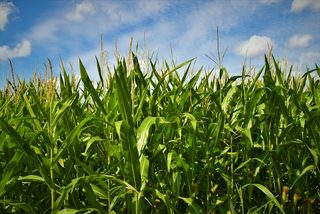
The organic corn research illustrates the broader challenge. Researchers note that mycotoxin risks can be influenced by factors including hybrid selection, crop rotation, insect pressure, harvesting and storage practices. The project is intended to establish a baseline that can support future recommendations for organic producers.
What Farmers Still Need to Learn
The OROWS project could provide useful information, but several questions remain unanswered until more seasons of data are available. The preliminary findings have not yet produced a complete ranking of grain varieties for disease resistance or tolerance. Conditions also vary considerably from one Pennsylvania farm to another. Soil, weather, planting dates, crop rotations and disease pressure can all influence field performance.
The timing of the research is another limitation. Results expected in early 2027 will represent an additional step in understanding disease patterns, but multiple years of testing are generally more informative than a single growing season because disease pressure can change substantially with weather.
For farmers, that means the research should complement rather than replace field scouting, local Extension guidance and variety information specific to their production conditions.
Building a More Informed Approach to Grain Production
Penn State’s work takes a practical approach to a problem that can have consequences from the field all the way through the grain market. By comparing varieties under organic conditions and documenting disease responses over time, researchers are working to give farmers information that has been difficult to find.
The most immediate value may come from better identification and earlier decision-making. Knowing what disease is present, understanding how a selected variety responds and recognizing the potential consequences for grain quality can help farmers make more informed choices throughout the growing season. As additional results become available, the research should provide a clearer picture of which varieties and management practices can help Pennsylvania’s organic grain producers protect crop health while maintaining yield and quality.