

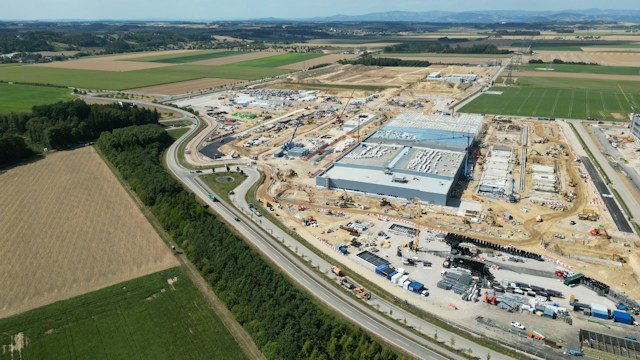
Pennsylvania’s energy debate is increasingly focused on several issues that intersect economic development, electricity demand, environmental policy and local decision-making. Data center proposals have become one of the most visible examples, as communities and state officials consider how large technology facilities could affect electricity demand, infrastructure and surrounding communities.
A July 2026 Quinnipiac University poll found that 74% of Pennsylvania registered voters surveyed opposed building an artificial intelligence data center in their community, compared with 16% who supported such development and 10% who did not offer an opinion. In February, opposition stood at 68%, while 20% supported construction and 12% had no opinion. Quinnipiac also found that 76% of respondents were following news about AI data centers very or somewhat closely.
The polling provides a snapshot of public sentiment, but it does not explain the reasons behind those views. It also measures opinions statewide rather than attitudes in specific communities where projects have been proposed. Those distinctions are important when considering individual developments.
Pennsylvania Adds New Requirements for Data Centers
The public debate comes as Pennsylvania has established new rules for proposed data center projects. On Aug. 18, Gov. Josh Shapiro signed Executive Order 2026-05, directing state agencies to require proposed data centers seeking state permitting to meet the Governor’s Responsible Infrastructure Development, or GRID, requirements.
The requirements address energy affordability, community engagement, workforce and economic development, transparency and environmental protection. The order also requires developers to receive local approval and make a legally binding commitment to meet the standards before the Department of Environmental Protection evaluates their permit applications. AI data center projects were also removed from the state’s permit fast-track program.
The state’s approach is designed to address one of the central questions surrounding large data centers: who pays for the additional infrastructure and electricity resources they require? The administration says developers must bear the costs associated with the additional electricity generation and infrastructure required for their projects rather than shifting those costs to other customers or the community.
Pennsylvania has also created a public data center project map through the Department of Environmental Protection. The state says it currently knows of at least 100 proposed data centers, although most have not formally entered the state’s permitting process or taken meaningful steps toward development. In fact, a list of proposed facilities does not mean every project will be constructed, and the number of projects ultimately approved could be considerably smaller.
Community Solar Remains Part of the Energy Debate
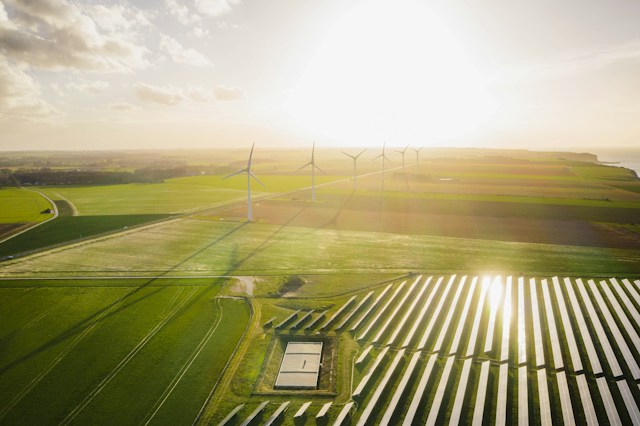
Community solar is another issue highlighted in the discussion over Pennsylvania’s energy future. The concept allows people who cannot install panels on their own properties, including some renters and households with unsuitable roofs, to subscribe to electricity generated by a shared solar facility.
Pennsylvania lawmakers have considered community solar legislation for several years. A previous community solar bill, House Bill 1842, passed the House in March 2024 before moving to the Senate. More recently, House Bill 504, known as the Community Energy Act, passed the House in 2026 and remained under consideration in the Senate, according to legislative tracking cited in May and July reports.
The proposed model would create a framework under which participating customers receive credits associated with electricity generated by a community solar facility. The legislative proposals have included requirements governing facility size, subscribers and utility bill credits.
Supporters of community solar argue that it could broaden access to solar generation beyond homeowners with suitable rooftops. The actual financial benefit to individual subscribers, however, would depend on the final program structure, utility arrangements, subscription terms and electricity prices. Claims about a specific percentage of savings should therefore be treated as estimates rather than a guaranteed household benefit.

Environmental Groups Propose a Larger Renewable Energy Role
PennFuture and the Conservation Voters of Pennsylvania have advocated increasing the state’s renewable-energy requirements, along with policies supporting community solar and additional solar installations.
One PennFuture proposal calls for increasing the share of Pennsylvania electricity supplied by Tier I clean energy sources to 35% by 2035. The organization’s materials describe that target as an increase from the state’s existing alternative-energy requirements.
These are advocacy proposals rather than current Pennsylvania requirements. That distinction is important. They represent positions advanced by environmental organizations and should not be presented as enacted state policy.
The debate also illustrates a larger question facing Pennsylvania: how to accommodate growing electricity demand while deciding which generation resources should supply it. The answer involves more than choosing between individual technologies. It includes transmission capacity, reliability, electricity prices, permitting, land use and the costs assigned to different classes of customers.
Clean Energy Investment Continues to Grow
National investment data provide another piece of the picture. The Clean Investment Monitor, a joint project of Rhodium Group and the Massachusetts Institute of Technology’s Center for Energy and Environmental Policy Research, reported $75 billion in U.S. clean energy and transportation investment during the second quarter of 2026.
That represented a 22% increase from the first quarter and a 4% increase from the second quarter of 2025, making it the second-highest quarterly investment level recorded by the project.
The quarter was particularly notable for distributed electricity generation and storage. Investment in those technologies reached nearly $12 billion, more than double the first-quarter level. Residential battery storage alone accounted for a substantial share of that spending.
The national figures provide context but should not be interpreted as evidence of equivalent growth in Pennsylvania. The Clean Investment Monitor tracks the United States as a whole, and investment patterns can differ substantially from state to state.
Questions Surround National Forest Protections
Another issue involves federal management of national forests. The U.S. Forest Service maintains data on inventoried roadless areas under the 2001 Roadless Area Conservation Rule, including areas within Pennsylvania’s Allegheny National Forest.
For Pennsylvania, the issue is particularly relevant because the Allegheny National Forest contains some of the state’s largest blocks of federally managed forestland. Changes to road and resource-management rules could affect questions involving timber, recreation, access and environmental protection.
A Debate With Several Competing Priorities
So, how should Pennsylvania manage its energy resources while accommodating economic development protecting communities and natural resources?
Data centers represent one side of that challenge because they can bring investment and electricity demand at a scale that requires additional infrastructure. Solar and battery projects represent another part of the discussion, particularly as distributed energy resources become a larger part of national investment. Forest policy adds a separate land-management dimension involving federally owned natural resources.
Pennsylvania’s new data center requirements show that state policy is already changing in response to concerns about large electricity users. At the same time, proposals for community solar and higher renewable-energy targets remain matters for the legislative and regulatory process rather than settled policy.
For communities evaluating individual projects, statewide polling and national investment figures provide useful context, but they do not replace project-specific information. Questions about a facility’s electricity source, water use, employment, tax contributions, infrastructure requirements and effect on utility customers can vary considerably from one proposal to another.
The Quinnipiac poll measures statewide registered voters and does not establish why respondents oppose or support data centers. It also cannot determine how residents of a particular proposed-project area feel.
Similarly, national clean-energy investment figures do not demonstrate that Pennsylvania is experiencing the same investment pattern. Advocacy organizations’ recommendations describe proposed policy changes, not current law. And the existence of dozens of proposed data centers does not mean those projects will all proceed through permitting and construction.
Those limitations do not diminish the significance of the underlying developments. They show why Pennsylvania’s energy debate is likely to involve project-specific data as much as broad policy arguments.