
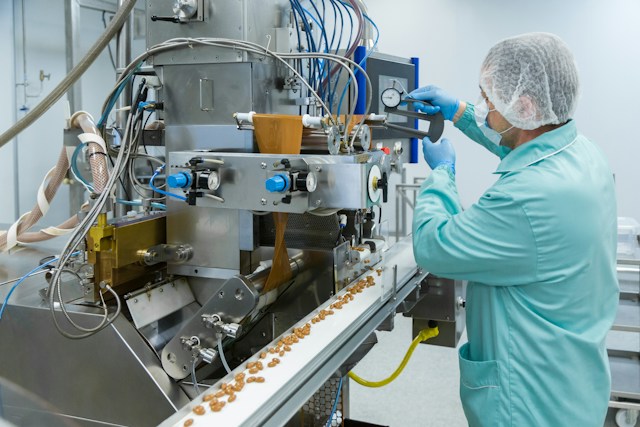
Eli Lilly and Company plans to invest $3.5 billion to establish a new pharmaceutical manufacturing facility in Lehigh County, marking the company’s first manufacturing operation in Pennsylvania and one of the largest corporate investments in the state’s life sciences sector.
The project, announced in January, is expected to create at least 850 jobs over five years. Lilly plans to purchase a site in Fogelsville in the Lehigh Valley for the facility, which will expand the company’s U.S. manufacturing capacity for next-generation weight-loss medicines.
The investment also represents a significant expansion of Pennsylvania’s pharmaceutical manufacturing base, an industry that already includes companies such as B. Braun, GSK and Eurofins Lancaster Laboratories.
Pennsylvania Is Providing Up to $100 Million in Support
Although the private investment is $3.5 billion, Pennsylvania is also providing substantial financial assistance to help secure the project.
The state’s Department of Community and Economic Development offered Lilly up to $50 million in tax credits through the PA EDGE Tax Credit Program. The company is also eligible for a $25 million grant through the Pennsylvania Strategic Investments to Enhance Sites, or PA SITES, program and a $25 million Pennsylvania First grant. Together, those programs represent up to $100 million in state support.
The state has separately committed up to $5 million through the Redevelopment Assistance Capital Program for a community college or technical school to establish workforce training connected to the project.
That workforce component could become particularly important as the facility moves toward operation. Pharmaceutical manufacturing requires specialized employees across areas such as production, engineering, quality control, maintenance and other technical fields. The planned training program is intended to help establish a pipeline of workers in the Lehigh Valley.
Permitting Is Part of the Development Strategy
Lilly is also receiving assistance through Pennsylvania’s Office of Transformation and Opportunity under the state’s PA Permit Fast Track Program.
The program was established through an executive order signed in November 2024 with the goal of coordinating complex permitting projects and reducing delays between state agencies and project developers. Lilly’s facility is among the large economic-development projects receiving coordinated assistance. For a project of this size, permitting and site preparation can be major components of the development schedule. The state’s PA SITES program is specifically intended to help communities prepare locations for major business investments, making site readiness part of the competition among states seeking large industrial projects.
In Lilly’s case, the combination of site-development assistance, tax incentives, workforce support and permitting coordination forms the state’s overall package for the project.
A Larger Role for the Lehigh Valley Life Sciences Sector
The Lilly investment adds another major pharmaceutical operation to a region that has been developing its life sciences and advanced manufacturing industries.
Pennsylvania officials point to expansions by Eurofins Lancaster Laboratories, Apozeal Pharmaceuticals, B. Braun and GSK as examples of additional activity in the state’s life sciences sector.
The economic effect of Lilly’s project could extend beyond the employees working directly at the facility. A large pharmaceutical manufacturing operation can require suppliers, contractors, maintenance services, transportation, specialized equipment and other business services.
The state announcement does not provide an estimate of the number of indirect or induced jobs that could result from the project. As a result, the 850-job figure should be understood as the announced direct employment target rather than a measurement of the project’s total potential employment impact.
The Investment Comes With Significant Public Incentives
The scale of the public support is an important part of the story. Pennsylvania is offering up to $100 million in direct incentives and has separately committed up to $5 million for workforce development.
That means the state’s announced potential support could reach $105 million when the workforce-development commitment is included, although the $5 million RACP award is directed to an educational institution rather than directly to Lilly. The final value of the tax credits and other incentives will depend on the terms and conditions attached to the programs.
The state has not provided a projected annual tax-revenue figure from the completed facility, nor has it published a detailed cost-benefit analysis comparing the public incentives with expected employment, investment and tax activity.
Those figures would provide additional context for evaluating the project’s long-term fiscal impact.
Part of a Broader Push for Business Investment
The Lilly announcement is also being presented by Pennsylvania officials as part of a broader effort to attract large private investments.
The administration reports that more than $39 billion in private-sector investment has been attracted to Pennsylvania since the governor took office, associated with more than 21,500 jobs. Those figures encompass projects across multiple industries and are not specific to the life sciences sector.
The state also points to $550 million in investments intended to prepare sites for business expansion, support main streets and assist small businesses and entrepreneurs. Separately, Pennsylvania has used PA SITES funding to prepare additional properties for industrial and commercial development.
Lilly’s project illustrates how those different economic-development tools can be combined around a single large investment. Site preparation can address physical infrastructure, tax incentives can reduce some development costs, workforce programs can help address hiring needs and permitting assistance can coordinate the regulatory process.
A New Pharmaceutical Manufacturing Footprint for Pennsylvania
Lilly’s planned Fogelsville facility represents a substantial new manufacturing investment in the Lehigh Valley and gives one of the world’s largest pharmaceutical companies a permanent production presence in Pennsylvania.
The next phase will be measured less by the size of the announcement and more by the project’s execution: site acquisition, permitting, construction, workforce development and eventual hiring. Those milestones will provide a clearer indication of how the investment translates into long-term economic activity in the Lehigh Valley.